This week’s word of the week is more important than ever. In a world that is seeking to divide us, we need to realise that our community and our faith is open to all.
Day 1 – All are welcome…
We invite you to start with the Sign of the Cross.
Response: In the name of the Father and of the Son and of the Holy Spirit, Amen
This week, the scripture helps us to realise that every person is special and has a part to play in our community. It addresses attitudes of self-deprecation (when we feel like we’re not good enough or don’t belong) and arrogance (when we feel like we can do everything on our own and that we don’t need others), both of which are forms of exclusion.
A reading from the First Letter of Saint Paul to the Corinthians
For just as the body is one and has many members, and all the members of the body, though many, are one body, so it is with Christ. For in the one Spirit we were all baptised into one body—Jews or Greeks, slaves or free—and we were all made to drink of one Spirit.
Indeed, the body does not consist of one member but of many. If the foot would say, “Because I am not a hand, I do not belong to the body,” that would not make it any less a part of the body. And if the ear would say, “Because I am not an eye, I do not belong to the body,” that would not make it any less a part of the body. If the whole body were an eye, where would the hearing be? If the whole body were hearing, where would the sense of smell be? But as it is, God arranged the members in the body, each one of them, as he chose. If all were a single member, where would the body be? As it is, there are many members, yet one body. The eye cannot say to the hand, “I have no need of you,” nor again the head to the feet, “I have no need of you.” On the contrary, the members of the body that seem to be weaker are indispensable, and those members of the body that we think less honourable we clothe with greater honour, and our less respectable members are treated with greater respect; whereas our more respectable members do not need this. But God has so arranged the body, giving the greater honour to the inferior member, that there may be no dissension within the body, but the members may have the same care for one another. If one member suffers, all suffer together with it; if one member is honoured, all rejoice together with it.
Now you are the body of Christ and individually members of it.
The Word of the Lord.
R./ Thanks be to God.

So how exactly does that link to our Word of the Week this week – inclusion? Inclusion means a full sharing of life’s experiences, both joy and suffering. “If one part suffers, every part suffers with it; if one part is honoured, every part rejoices with it.” This establishes a bond of sympathy and empathy, where the well-being of one member is directly tied to the well-being of the whole community. In short, this passage from Paul’s letter provides a model for inclusion: every person is a is made in the image and likeness of God and therefore should be equally valued and treated as a necessary part of the Body of Christ.
Discussion Questions:
In what ways can we live out our school mission statement ‘I have come so that they may have life, and have it to the full’ (John 10:10) so that everybody feels included at our school?
The Catholic Social Teaching principle of Human Dignity reminds us that we are all made in the image and likeness of God and that we are all special to him. Give examples of groups within our school, local and/or global community who are not always treated with dignity and think about ways in which we can use our collective voice to stand up for them.
Click below to “Add Comment” and capture some of what has been said in your form for others to see or add them to your form scrapbook if you have one!

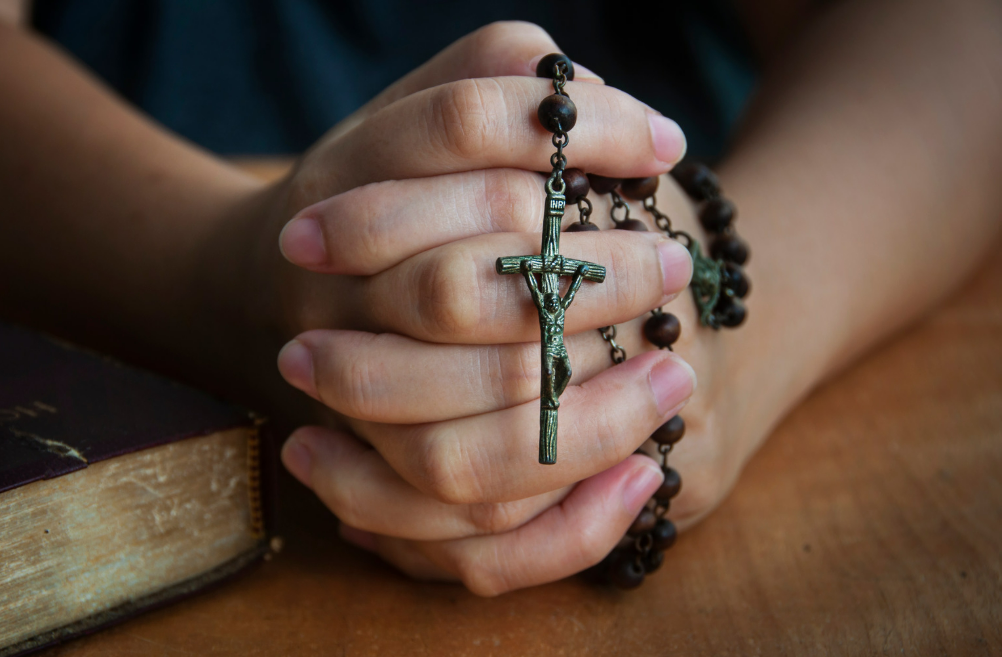
As we are in October, the month of the Holy Rosary, we say together:
Hail, Mary, full of grace,
the Lord is with thee.
Blessed art thou amongst women
and blessed is the fruit of thy womb, Jesus.
Holy Mary, Mother of God,
pray for us sinners,
now and at the hour of our death.
Amen.
Day 2 – Celebrating our history…
We invite you to start with the Sign of the Cross.
Response: In the name of the Father and of the Son and of the Holy Spirit, Amen
October is also Black History month, a time when we celebrate the incredible contribution of Black culture to our world and to our lives. Take a look at this clip from the film Hidden Figures – It documents the very real struggle that Black people have faced, and still face today.
In the clip the actress talks about being the “first” and celebrates how there always has to be a first in order for things to change.
Why is it so important we look to history when we think about inclusion?
We want you as a form to think about your history, who were the first people in your families to do things? What different cultures and ethnicities are represented in your form.
Spend some time sharing your stories, your history, and your diversity so we can better understand in include each and very member of our community.
As we are in October we pray again, the Hail Mary to pray for those who feel left out.
Hail, Mary, full of grace,
the Lord is with thee.
Blessed art thou amongst women
and blessed is the fruit of thy womb, Jesus.
Holy Mary, Mother of God,
pray for us sinners,
now and at the hour of our death.
Amen.
Day 3 – The Invisible Backpack…
We invite you to start with the Sign of the Cross.
Response: In the name of the Father and of the Son and of the Holy Spirit, Amen
Often, when we look at someone, we only see what’s on the surface. We don’t see the things they are carrying with them.
Earlier this week we were reminded of the Catholic Social Teaching principle of Human Dignity which reminds us that every single one of us is created in the image and likeness of God. We are all special to him. When Jesus was asked what the greatest commandment is he replied, “‘Love the Lord your God with all your heart and with all your soul and with all your mind… [and] love your neighbour as yourself.”
Just for a moment, imagine you are carrying an invisible backpack.
Imagine that in that backpack, you are carrying all of things that might make today difficult or challenging for you. For example, it could be worries about an upcoming test, a disagreement with a friend or family member, a health concern, day-to-day tasks that you find challenging or even something exciting that’s distracting you. Everyone in this room has a backpack, and no two are the same. Focus on one of those things in your own personal invisible backpack. You don’t need to share this out loud, just let it enter the forefront of your mind and really focus on it for 60 seconds.
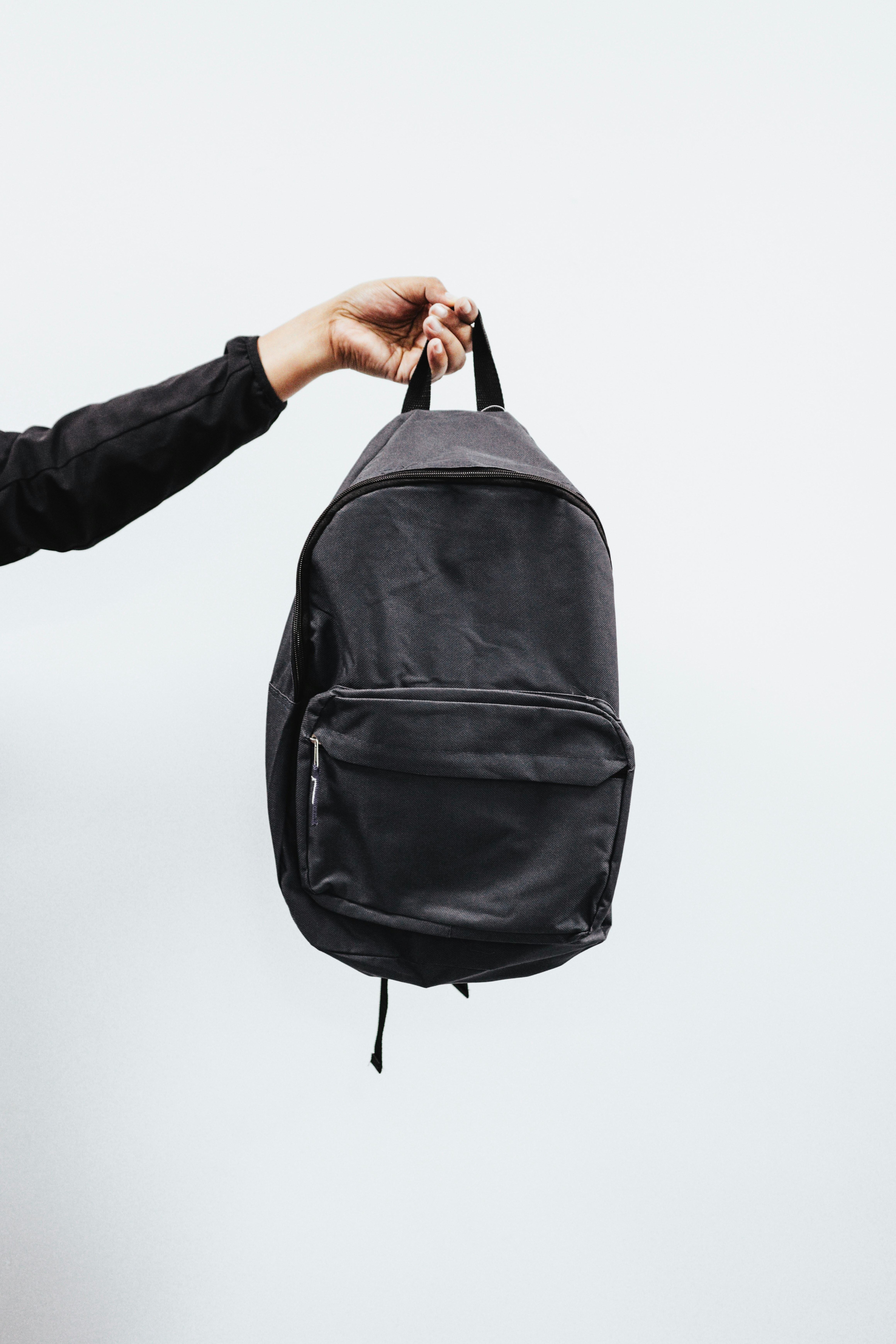
Today’s mission is a simple one.
Take a small piece of paper and think about how you can treat someone differently.
Think about a way you can see past the surface and really understand and include someone, by seeing them for who they are.
Write down a promise to yourself, for yourself, to see and include people today.
Place it in your own backpack as a reminder of what inclusion really means – to see people for who they are and the see their value, their worth and their dignity.
Hail, Mary, full of grace,
the Lord is with thee.
Blessed art thou amongst women
and blessed is the fruit of thy womb, Jesus.
Holy Mary, Mother of God,
pray for us sinners,
now and at the hour of our death.
Amen.



3 comments