Please remember to check the ‘Catholic Life and Chaplaincy Notices’ tab weekly!
Helpful resources to support the planning and delivery of prayer and liturgy can also be found on our diocesan Chaplaincy website here.
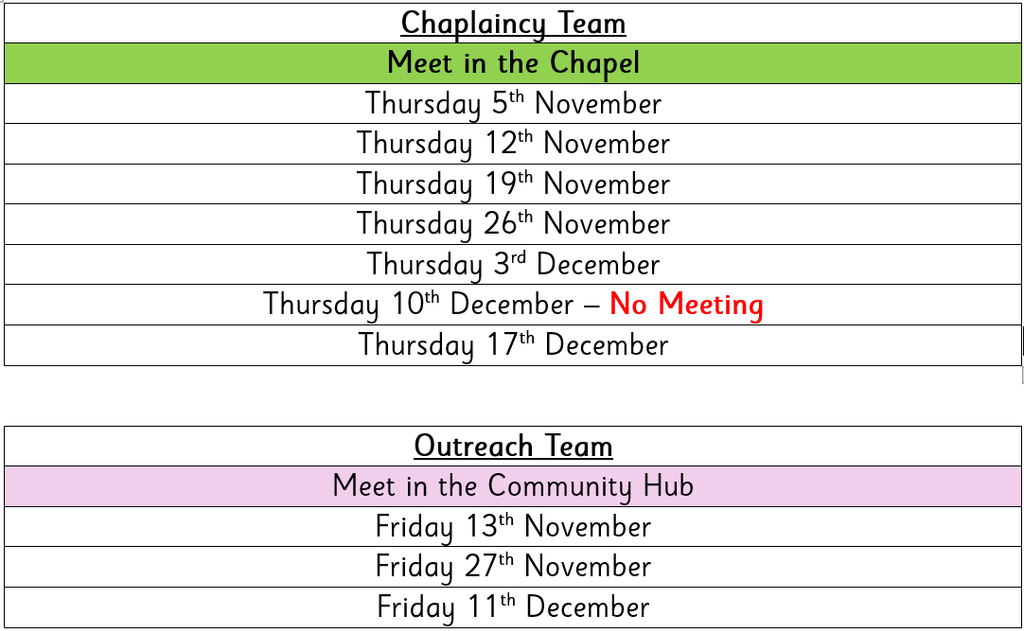
Part 1 – Watch
Part 2 – Listen
Part 3 – Do
Catholic Life and Chaplaincy Notices
Useful Resources
| The Word of the Week is: | We are in: | The liturgical colour is: |
| Remembrance | Week 32 in Ordinary Time, Year A | Green |
You are invited to begin by making the Sign of the Cross.
Response: In the name of the Father and of the Son and of the Holy Spirit. Amen.
The Word of the Week this week is remembrance.
November in the Catholic tradition is dedicated as the ‘month of the Holy Souls’. It is set aside as a special time to remember and pray for everybody who has died including our own loved ones, but especially those people who do not have any friends or family to pray for them.
Dia de los Muertos, or “Day of the Dead,” is a primarily Mexican way of celebrating the feasts of All Souls Day and All Saints Day. Although it is not a Catholic holiday, it’s roots share many similarities with the respect for the dead shown within the Catholic tradition, especially during the month of November.
The film Coco teaches us some powerful things:
Love Beyond the Grave: Coco emphasises that those who have died are not gone or forgotten. Catholicism similarly teaches that love and spiritual ties endure past physical death. Saint Paul in his first letter to the Corinthians tells us that, “We shall not all sleep, but we shall all be changed…”
The Power of Remembrance: In Coco, remembering the dead keeps their memory alive. In Catholic tradition, remembering takes the form of intercessory prayer, offering Holy Masses, and performing acts of charity for the Holy Souls in Purgatory to aid their journey to Heaven. Particularly in the month of November, Catholics visit the graves of their loved ones and attend cemetery blessings and special remembrance Masses. They pray for all the holy souls. The Eternal Rest prayer is a traditional way of praying for the dead.
Family and Lineage: The film places immense value on honouring our ancestors. Catholic tradition honours all who have gone before us, extending our ties beyond our blood relations and across generations, uniting the global church, the suffering of those in Purgatory, and all those who have already achieved the peace of Heaven.
One important difference however between Catholic tradition and the film Coco is that a soul will never fade away permanently if no living person on earth remembers them. As Catholics, we believe that every person is a child of God made in his image and likeness and worthy of human dignity. Catholics believe that every human soul is immortal and that God will never forget any of us.
Although it can make us feel sad to remember people who are no longer with us, we can hope and pray that they are now free from suffering and are instead at peace with God, enjoying their everlasting life with God in Heaven. This film clip celebrates a love which lasts beyond the end of our earthly life and reminds us of the importance of remembrance.
Loving Father,
Through the ultimate sacrifice of your son Jesus Christ we are given the hope of eternal life in heaven. May we have faith that when our earthly life is over, we will not cease to exist but instead be changed, entering into our new life with you in heaven.
We pray for the all the holy souls who have gone before us; that you look with love and favour upon them and that they will be with you today in paradise.
Amen.
In the name of the Father and of the Son and of the Holy Spirit. Amen.
You are invited to begin by making the Sign of the Cross.
Response: In the name of the Father and of the Son and of the Holy Spirit. Amen.

A reading from the Holy Gospel according to John.
R./ Glory to you O Lord.
“This is my commandment, that you love one another as I have loved you. Greater love has no one than this, that someone lay down his life for his friends.”
The Gospel of the Lord.
R./ Praise to you Lord Jesus Christ.
This scripture is often used at services of remembrance. Throughout the world this week, many people will gather together to remember those who have lost their lives due to war and conflict; to show respect for their service, to mourn their loss and to look ahead with hope to a more peaceful future.
Remembrance Day itself marks the actual day World War One ended, at 11am on the 11th day of the 11th month, in 1918. World War One is sometimes known as ‘the Great War’ due to the scale of the conflict across the globe. It was also once deemed ‘the war to end wars’, but it quickly became clear that this in fact was not true as a second world war followed and countless other conflicts.
Today, you are invited to listen to a song titled ‘The Green Fields of France’ which used to be played regularly as part of the SSPP Remembrance Day service. It is a highly emotive song. Today, I invite you to listen to the lyrics. The song is sung as though directly to a soldier named Willy McBride. The lyrics highlighted below offer a particular opportunity for us to reflect on the consequences of war and conflict, and they might inspire us to commit towards being better peacemakers in own lives, through our own actions and words and through our prayers for a more peaceful world.
“And I can’t help but wonder oh Willy McBride
Do all those who lie here know why they died?
Did you really believe them when they told you the cause,
did you really believe that this war would end wars?
Well the suffering, the sorrow, the glory, the shame
the killing and dying it was all done in vain;
oh Willy McBride it all happened again,
and again, and again, and again, and again.”
Discussion Questions:
- What current issues are threatening peace in our local communities and throughout the world today?
- How can we live in a way which promotes peace in our own lives and prevents further war and conflict?
Click below to “Add Comment” and capture some of what has been said in your form for others to see or add them to your form scrapbook if you have one!

Lord,
Catholic Social Teaching calls us all to be peacemakers. Give us the patience and understanding required to be peacemakers in our world today. Grant that we might be role models of tolerance and love within our own communities. Inspire our actions and words so that we might help to bring about a more peaceful future for all.
Amen.
In the name of the Father and of the Son and of the Holy Spirit. Amen.
You are invited to begin by making the Sign of the Cross.
Response: In the name of the Father and of the Son and of the Holy Spirit. Amen.
Below you will find questions to help you to respond to our own service of remembrance this week. You can do this by printing off a copy of the template (attached below) and holding a class discussion, or by choosing one or two questions to respond to personally on Post-it notes. However you choose to respond, please ensure something is put into your scrapbook.
- What messages of faith and hope did you take from today’s service?
- How does the Catholic teaching about peace and forgiveness connect to Remembrance Sunday?
- What prayers or readings stood out to you, and why?
- How does remembering those who died help us live out Jesus’ message of love and service?
- How did you feel during the silence or prayers of remembrance?
- Why is it important to remember people we have never met?
- How can we show respect for those who sacrificed their lives through our actions today?
- What can we do in our community or school to promote peace and understanding?
- How does remembering the past help us make better choices for the future?
- What other reflections have you made from today’s beautiful service?
In the Catholic tradition, the Eternal Rest is a prayer which is commonly prayed during the month of November.
Eternal rest grant unto them, O Lord,
and let perpetual light shine upon them.
May they rest in peace.
Amen.
In the name of the Father and of the Son and of the Holy Spirit. Amen.
Calling all Year 10’s, 11’s and 13’s for FLAME 2027!
On Saturday 6th March 2027, thousands of young people from across England and Wales will fill the iconic OVO Arena Wembley for the biggest Catholic youth gathering in the country: FLAME 2027! A jam-packed day of live music, dance, motivational speakers, praise and worship in a way you’ve never experienced before!
See the posters around school for more information or pop in to see Lucy in the Chaplaincy Office/Community Hub to ‘sign up’. There’s only about 20 spaces available! Register your interest directly with Lucy or with your Form Tutor ASAP!
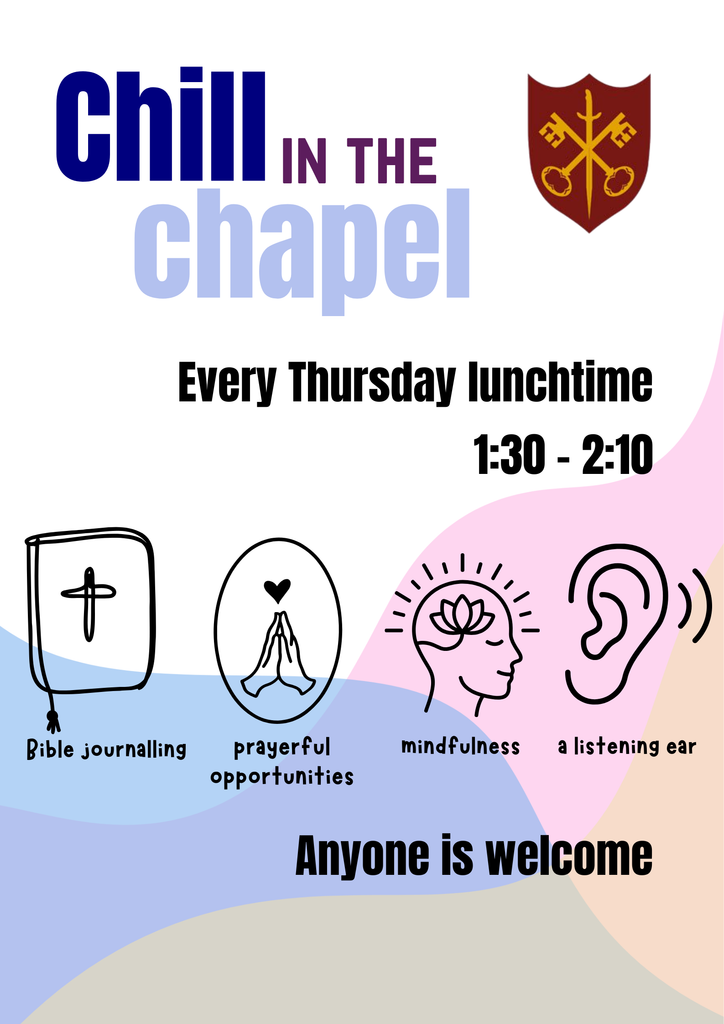
Are you looking for a quiet space to go at lunch time? Have you considered the chapel?
Our school chapel (at the bottom of the Humanities staircase) is a welcoming and inclusive space for everybody. You do not need to be Catholic to make use of the chapel. Although it is primarily a place of prayer and worship it is also a suitable space for quiet reflection and wellbeing. Come into this warm and welcoming space this term and sit a while. Listen to some calming music, do something creative or engage with some of our prayerful resources. The choice is yours!
The chapel will be open throughout Thursday lunchtime. Anyone is welcome. You don’t need to stay for the whole of lunch either, just call in for as long as you’d like to and make sure you eat before or after you come. Thank you.
Here are some resources to help you with the planning of Celebrations of the word.
Open Bible – Search the Bible by keyword for scripture suitable to your theme.
Planning sheets – Use the planning sheets on this page to plan your Celebration of the word. Remember that somebody else should evaluate on the same sheet (or on a second copy) during or shortly after your delivery.
Seasonal music – Hymns and worship songs recorded by members of the Trust Chaplaincy Team suitable for different seasons and themes throughout the liturgical year.
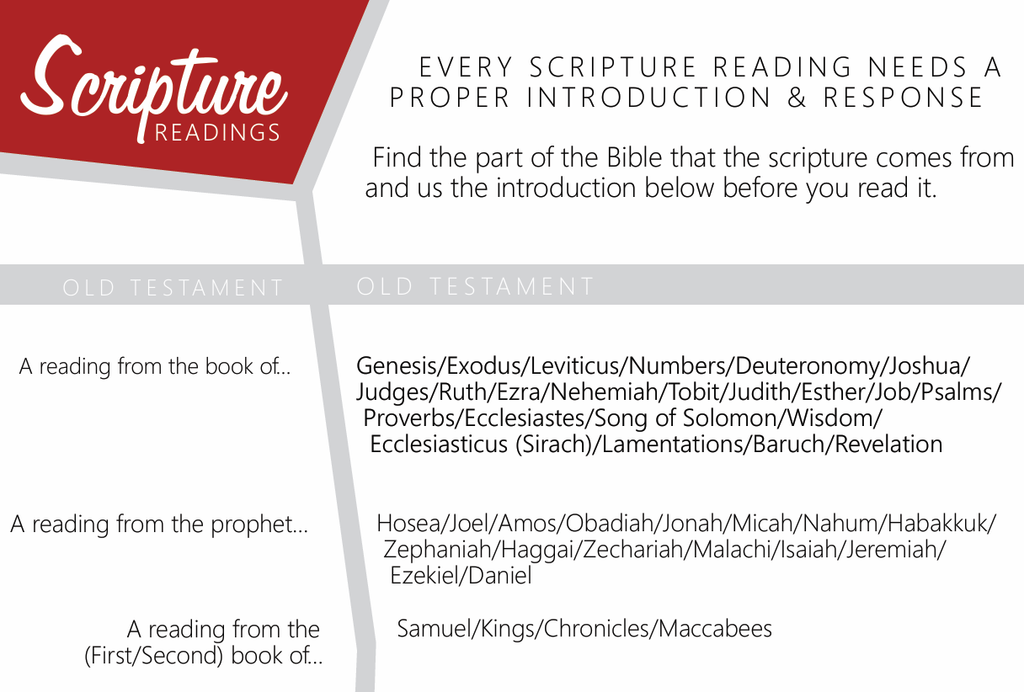
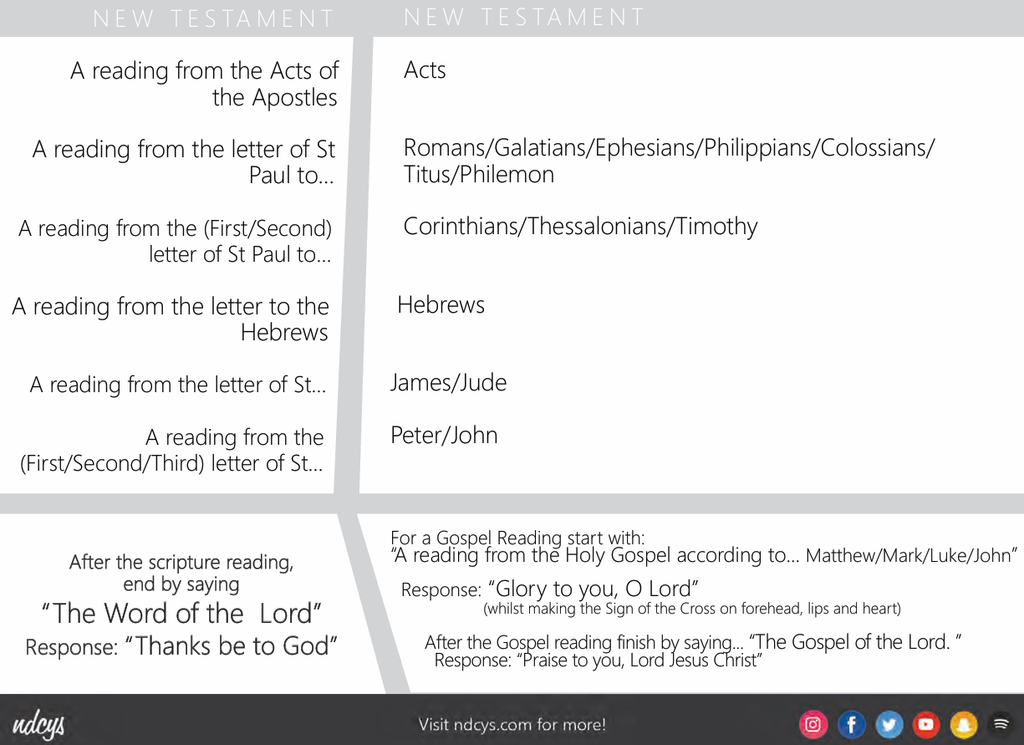
Introducing Scripture – It is very important that we give scripture the reverence it deserves. We should use translations taken from the English Standard Version at Saint Peter and Saint Paul’s. Ensure you choose this version if taking scripture from sites such as BibleGateway. Scripture should also be introduced and concluded correctly, depending on where in the Bible it comes from. A helpful guide can be found below. Please note the specific instructions and additions when scripture comes from one of the four Gospels (Matthew, Mark, Luke or John). Ordinarily, we stand for the Gospel and we stay seated for scripture which comes from elsewhere.



Post Comment