Welcome to the third week of Lent. Over the last two weeks, we have looked at Prayer (connecting with God) and Fasting (disconnecting from the things that control us). If Prayer looks up and Fasting looks in, then our third Lenten discipline, Almsgiving, looks out. Almsgiving is an old-fashioned word for giving to those in need. But in the Catholic tradition, it is not just about dropping spare change into a bucket to make ourselves feel better; it is about justice, dignity, and recognising that we belong to each other.
Section 1: The Global Family (CST)
We invite you to start with the Sign of the Cross.
Response: In the name of the Father and of the Son and of the Holy Spirit, Amen
A reading from the First Letter of St John (3:17-18)
“How does God’s love abide in anyone who has the world’s goods and sees a brother or sister in need and yet refuses help? Little children, let us love, not in word or speech, but in truth and action.”
The Gospel of the Lord
R./ Praise to you Lord Jesus Christ.

The Catholic Church has a set of guiding principles called Catholic Social Teaching (CST). It is essentially the Church’s blueprint for how to build a fair society. One of the main pillars of CST is Solidarity. Solidarity means understanding that we are one single human family, regardless of national, racial, or economic boundaries. If someone is suffering on the other side of the world, they are not a stranger; they are our brother or sister. When we give “alms” (money, time, or resources), we aren’t just doing a nice favour. We are restoring justice. We are taking the resources that God gave to the whole world and making sure our family members have their fair share.
Discussion Questions:
- Why is it sometimes easier to ignore global poverty than it is to ignore someone struggling right in front of us?
- Catholic Social Teaching says we must have a “Preferential Option for the Poor” (putting the needs of the poorest first). What would our school look like if we put the most vulnerable students first?
Click below to “Add Comment” and capture some of what has been said in your form for others to see or add them to your form scrapbook if you have one!

Lord God, Open our eyes to see the world as You see it: one global family. Forgive us when we build walls instead of bridges. Teach us to love not just with our words, but with our actions and our choices. Amen.
Section 2: The Work of Justice (CAFOD)
We invite you to start with the Sign of the Cross.
Response: In the name of the Father and of the Son and of the Holy Spirit, Amen.
CAFOD exists to put Catholic Social Teaching into action. They don’t just hand out food; they work with local experts to give communities the tools they need to lift themselves out of poverty, standing up for human dignity. True Almsgiving is standing alongside organisations like this to help heal a broken world.
As this quiet, steady music plays, we are going to use the silence to reflect on what we hold in our hands. Rest your eyes and allow the slow pace of the music to settle your mind.
As you listen, ask yourself:
- Think about the things you “own” (your money, your talents, your time). Do you hold onto them tightly with a closed fist, or do you hold them with an open hand, ready to share?
- The people CAFOD works with are not “problems to be solved”; they are human beings with profound dignity. How does it change my attitude to charity when I view the poor as my equals?
- What is one small thing I have that I could share with someone else this week?
Prayer: Let us pause for a moment of silence.
God of Justice, We give thanks for the work of CAFOD and all those who fight for fairness in our world. When we are tempted to be greedy or selfish, remind us of our brothers and sisters. Soften our hearts, and open our hands. Amen.
Section 3: Welcoming Christ
We invite you to start with the Sign of the Cross.
Response: In the name of the Father and of the Son and of the Holy Spirit, Amen
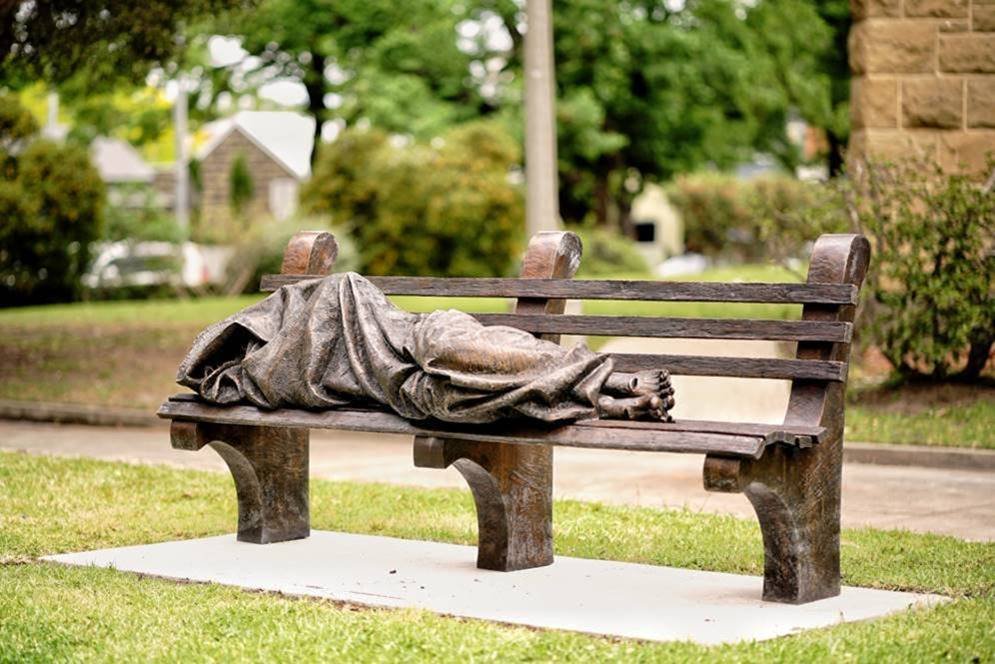
There is a famous bronze sculpture called the “Homeless Jesus”, which is placed outside many Catholic churches around the world. It depicts a life-sized person sleeping on a park bench, completely huddled under a blanket. You cannot see their face. The only way you know it is Jesus is because the bare feet sticking out from the bottom of the blanket bear the scars of the crucifixion. It reminds us of Christ’s own words: “Whatever you did for the least of these brothers and sisters of mine, you did for me.”
The Activity: The Holding Cross Today, we are going to pass a small wooden holding cross around the room in silence.
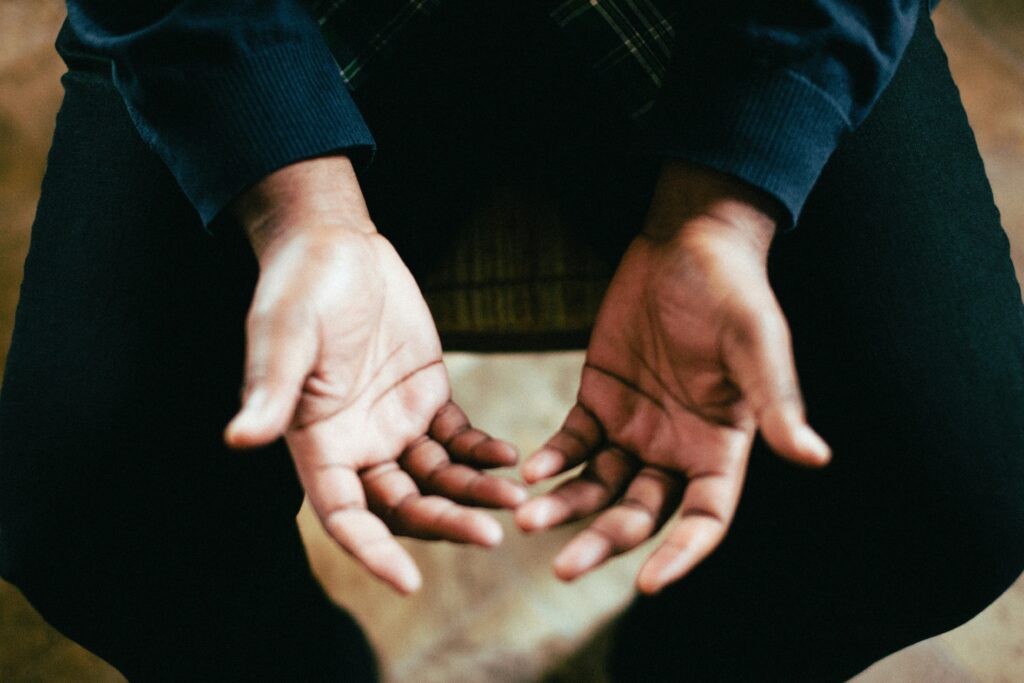
- The Open Hand: To receive the cross from the person next to you, you must open your hand. You cannot receive Christ with a closed, selfish fist.
- The Reflection: As you hold the cross in the palm of your hand, think about the image of the Homeless Jesus. Realise that when we open our hands to the poor, the lonely, and the vulnerable, we are literally welcoming Christ.
- The Commitment: Before you pass the cross on to the next person, make a silent promise in your head. Think of one thing you can give this week with an open hand (e.g., your patience, your time to help someone, or a donation to CAFOD).
Lord Jesus, You disguise Yourself in the poor, the hungry, and the homeless. As we opened our hands to receive this cross today, help us to open our lives to those in need. Teach us to give generously, to fight for justice, and to love without limits. Amen.


1 comment